
Notes from Upstream: Lunatics, Lovers and Poets

In a post a few weeks ago, I explained why I choose not to encumber my novels with maps.
For one thing, maps are specific. They spell things out. They restrict not only my novel-maker’s imagination but the reader’s imagination too. Why cut ourselves off from all the possibilities we create from a writer’s intentional lack of detail?
My post inspired this comment (from another room in our house) by Susan Vass:
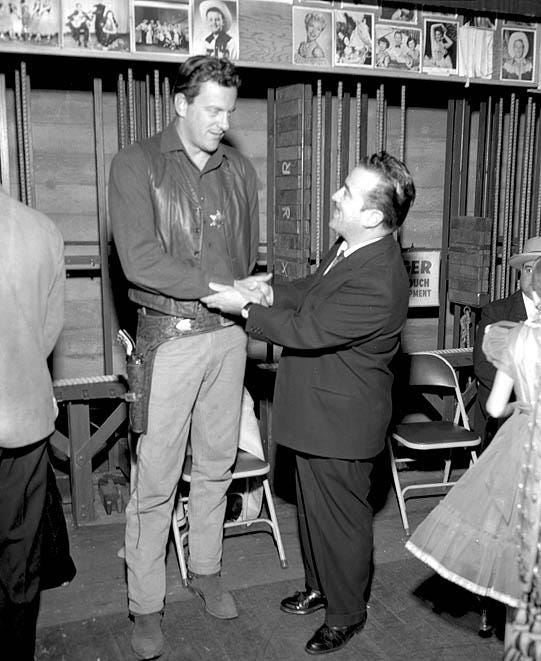
“This is why I loved radio as a kid. William Conrad was such a convincing Matt Dillon on the radio and -- for sad and obvious reasons, including mercy for a horse -- he could not make that transition to the small screen. AG”
True. For some reason, when the producers took their popular radio western to TV they replaced the vocally impressive William Conrad with the physically impressive James Arness.
Do not fret over this injustice to Conrad. He did all right for himself. Here is Conrad’s resonant baritone rumbling out the opening credits in the sixties Fugitive TV series:
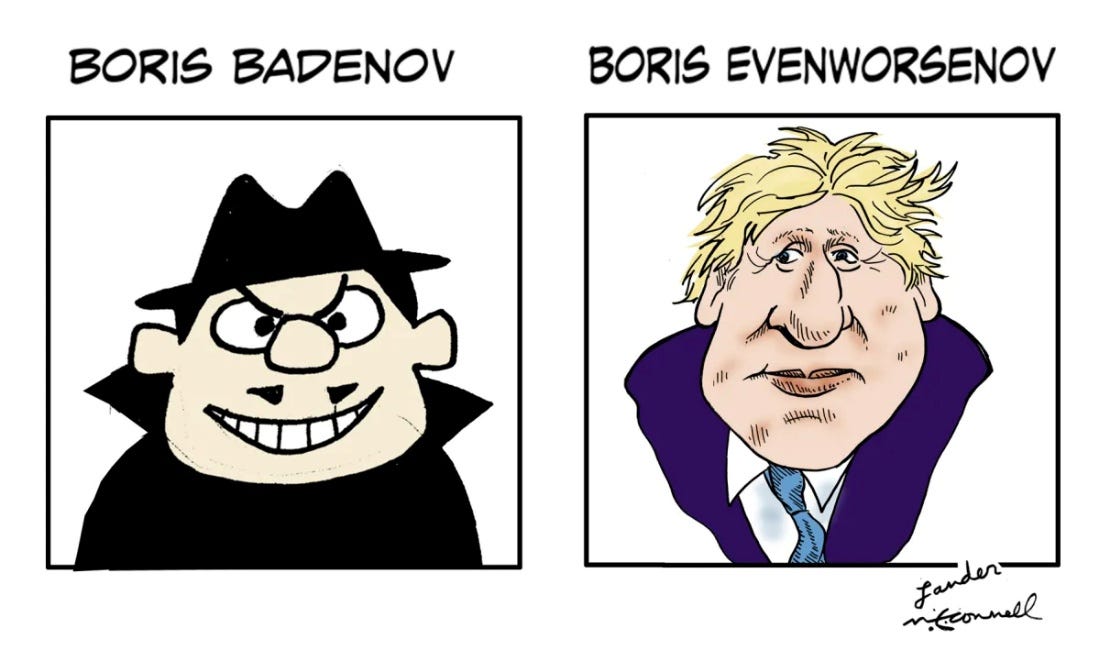
In a wildly different vocal register, as pre-show announcer for the Rocky And Bullwinkle cartoon show, he squabbled with villain Boris Badenov.
Which for some reason led me to this digression:
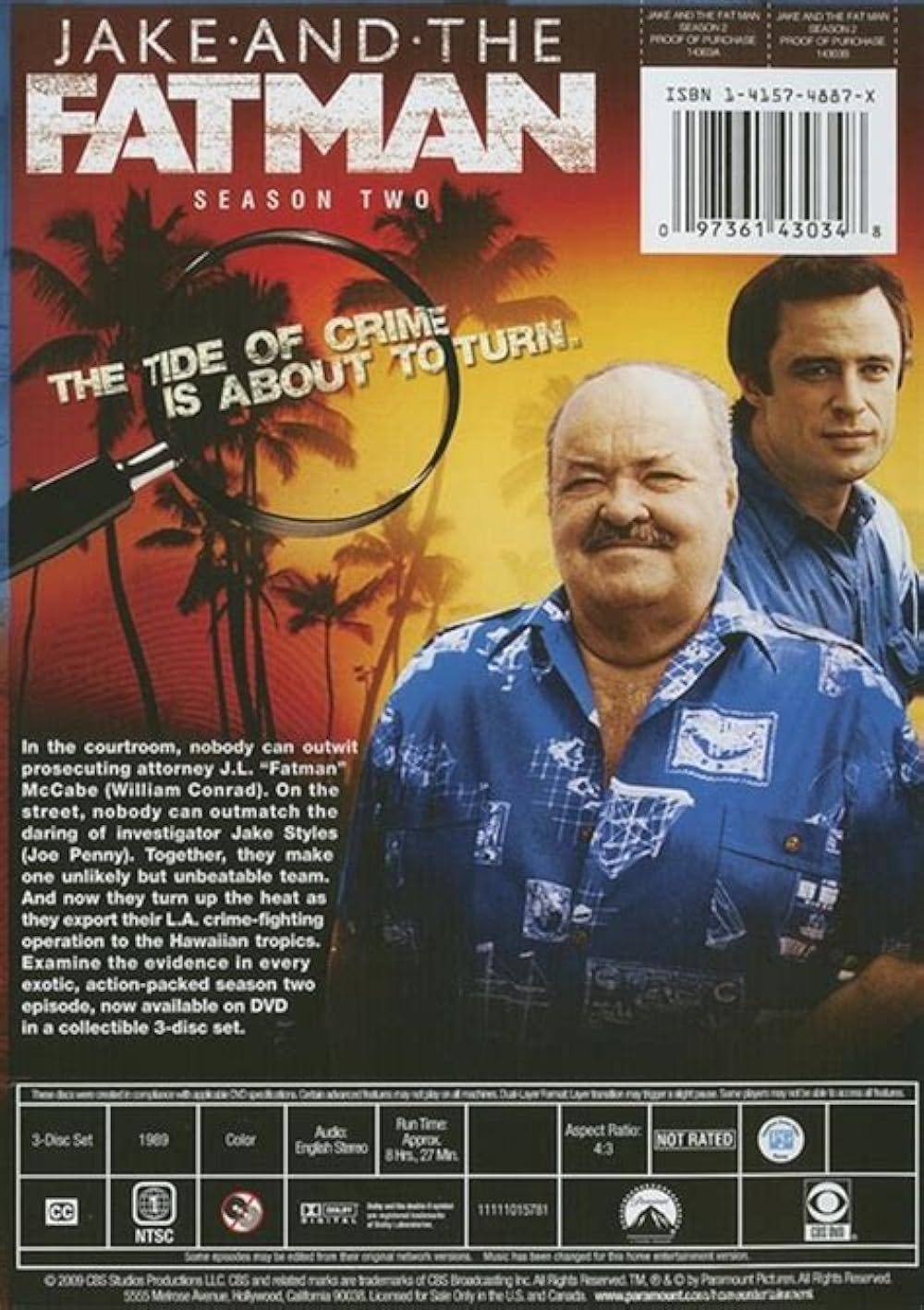
By 1973, twenty years after Gunsmoke, Conrad even got to star in his own TV series as Cannon, a private eye who fought bad guys in the flesh. For a change, he had another actor announcing for his show.
Still not satisfied, Conrad then starred in yet another TV series.
At around the same time as one network was refusing to cast Conrad as the TV Matt Dillon, another network’s broadcast was terrifying me. It was the Lux Radio Theater’s production of The Birds. Thanks to the Internet, I can now identify the exact date I heard it: July 20, 1953. I was six years old at the time.
The terror that ripping-yarn radio broadcast triggered in me has stuck in my mind for decades. The sound effects, including the chilling squeals of the birds, evoked in my mind terrifying images of the catastrophe a collective avian war on humans would come to. That night in bed, I lay awake long after I lay down. My imagination had done its work too well.
I know now that the producers based their radio drama on a novella by Daphne du Maurier.
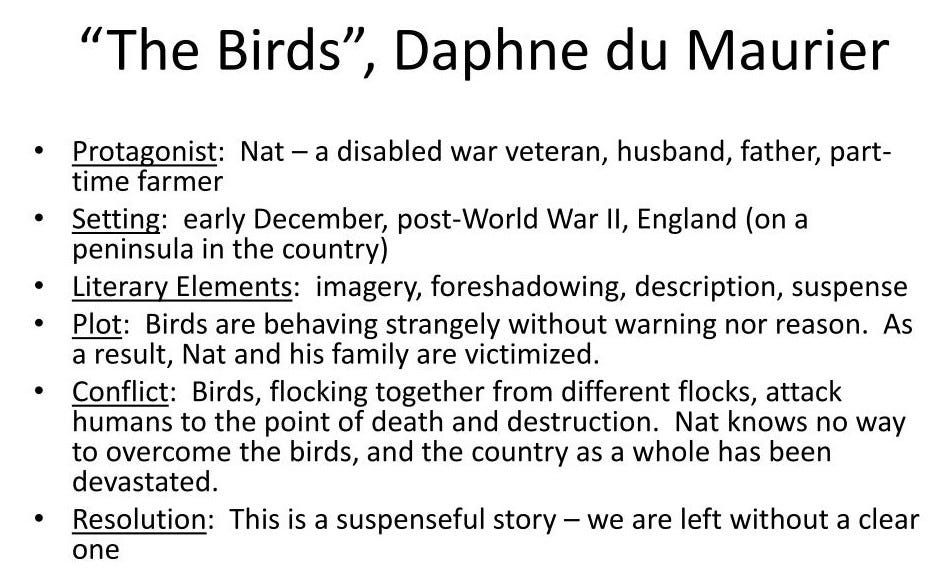
This week I read the original novella. Du Maurier wrote an effective horror tale based on an intriguing premise: what if all the birds in the world got sick of human violence and decided to wipe us out the way God wiped us out in the Bible?
In 1963, Alfred Hitchcock turned the same story into a popular horror movie.
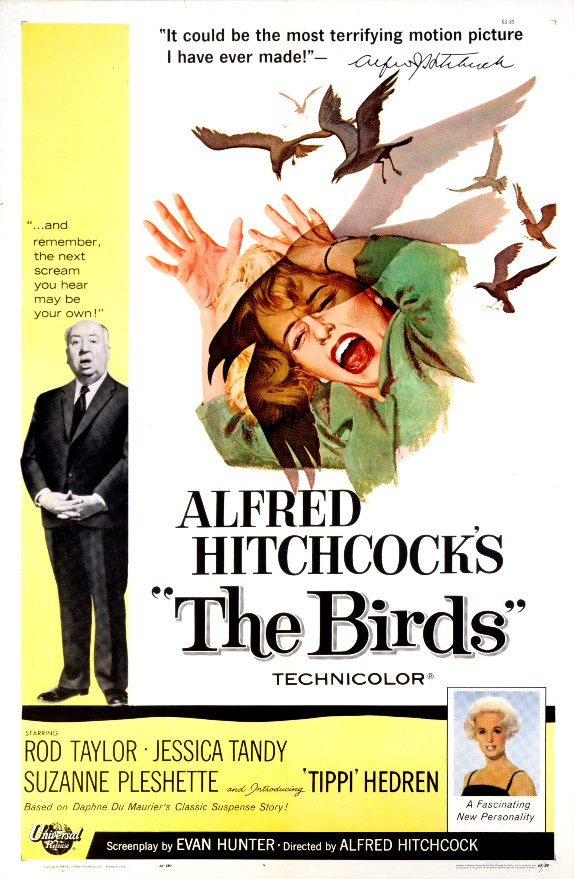
A few years after the movie came out, I taught school for a year in Browerville, Minnesota, a rural town of about 700. At school year’s end, the staff assembled the kids in the auditorium and rewarded them for their (relatively) good behavior by showing a movie, which happened to be The Birds.
At one of the scenes Hitchcock no doubt intended as his scariest, the students burst out laughing.
Living as farm kids with barnyards overrun by roosters and hens, they knew bird sex when they saw it.
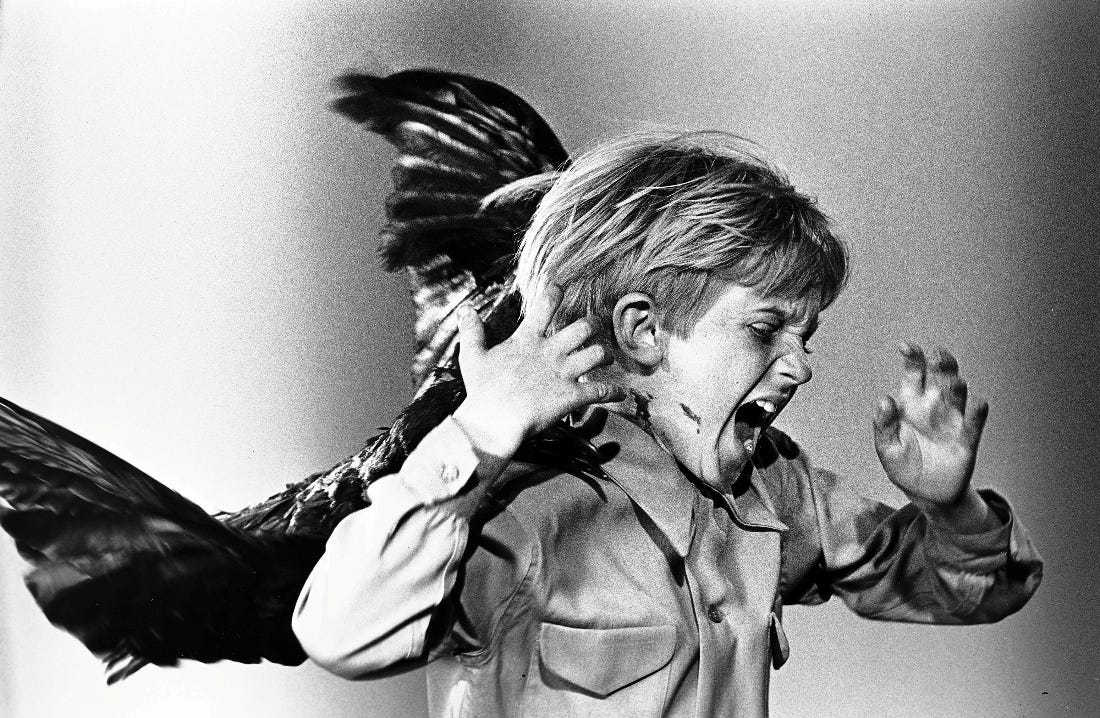
Maybe Hitchcock never lived on a farm.
If more Americans had still been living on farms, Hitchcock’s movie would have flopped. The great director had taken a solid horror premise one step too far by making his killers visible. He had stolen from his audience the power to exercise their own imaginations and replaced their frightening mental vision with his ludicrous literal vision.
What worked on radio did not work in a movie, at least not for me. Maybe it was because I still remembered the radio version.
Theater people label as “on the nose” anything that is too explicit or too literal. The phrase is not a compliment. The great director let himself get too on the nose.
Perhaps his mistake was making a movie at all. We expect movies to be realistic, graphic and true to life in every detail. Spielberg’s success in the opening scene of Saving Private Ryan derived from showing us the American D-Day assault on Omaha Beach in horrifying specifics. The makers of history movies like Waterloo and Barry Lyndon take great care to get every detail of costume, scenery and weaponry just right.
Even fantasy films depend on realistic representation. In The Lord of the Rings, if Aragorn carries a sword, it must look like a sword, it must act like a sword, and he must swing it like a true swordsman (which he does, by the way).
In directing The Birds, the great director missed something essential. Sometimes the art maker’s goal is not to represent, but to evoke. As Robert Edmond Jones wrote about live theater scenery,
“A good scene, I repeat, is not a picture. It is something seen, but it is something conveyed as well: a feeling, an evocation. Plato says somewhere, “It is beauty I seek, not beautiful things.” This is what I mean. A setting is not just a beautiful thing, a collection of beautiful things…It says nothing, but it gives everything.”
—The Dramatic Imagination
Overwritten, perhaps, but I think correct.
One of the reasons good novels so often make bad movies is that fiction works like theater.
The fiction writer’s goal should not be to describe an experience so much as to evoke one, that is, to give the reader’s imagination the opportunity to create his or her own experience. As Ernest Hemingway wrote in Death in the Afternoon:
“I was trying to write then and I found the greatest difficulty, aside from knowing truly what you really felt, rather than what you were supposed to feel, and had been taught to feel, was to put down what really happened in action; what the actual things were which produced the emotion that you experienced... the real thing, the sequence of motion and fact which made the emotion and which would be as valid in a year or in ten years or, with luck and if you stated it purely enough, always.”
Hemingway thought that, if a writer could represent in his writing an experience ”purely enough,” then that representation could substitute for the experience and evoke the same response from his reader as the actual experience would have evoked.
Is that possible? Can mere words do that?
If you’ve been following these Notes From Upstream posts, maybe you’re wondering, how’s he going to work Shakespeare into this one?
Easy:
“The lunatic, the lover and the poet
Are of imagination all compact:
One sees more devils than vast hell can hold,
That is, the madman: the lover, all as frantic,
Sees Helen’s beauty in a brow of Egypt:
The poet’s eye, in fine frenzy rolling,
Doth glance from heaven to earth, from earth to heaven;
And as imagination bodies forth
The forms of things unknown, the poet’s pen
Turns them to shapes and gives to airy nothing
A local habitation and a name.”A Midsummer Night’s Dream, Act 5, Scene 1
As both novel-maker and novel-reader, I fancy myself functioning as all three: lunatic, lover, and poet.
And I’m not the only one. The act of creation, whether story, essay, song, painting or symphony, is the act of allowing the creator’s imagination to shape the forms of things as yet unknown and to body forth new works.
What starts as an idea, that is, an “airy nothing,” winds up as a book or a song or a movie.
And being too “on the nose” risks cheating others out of the opportunity to bring their own imaginations to bear. The goal is not to dictate but to inspire.
Max Cossack lives with his wife Susan in a dusty little village in Arizona, in a house where two cats chase imaginary mice all around and bat them into tasty submission.
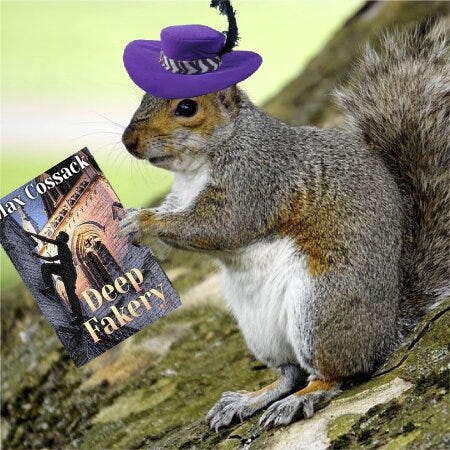
Also, in case you missed it, he just released the brand-new Max Cossack novel Deep Fakery. It’s available in eBook or paperback on Amazon.
This past Sunday, Perfessor Squirrel kindly wrote about Deep Fakery on his “Ace of Spades Sunday Morning Book Thread”:
“Max Cossack has a new book out that blends mystery, crime, and AI (Deep Fakery by Max Cossack):
“I have to admit, this is an intriguing premise that does raise interesting questions. As “deep fakes” become more and more powerful, it’s possible to create video of anyone doing anything. If someone created a simulated security camera image of me committing a heinous crime, I’d be in a world of hurt. I live alone and thus I might have difficulty establishing an alibi. Especially if an enemy also created a digital trail establishing enough circumstantial evidence to plant seeds in the minds of jurors that I *could* have committed the crime...”
Perfessor Squirrel also posted a candid photo of himself with the book.
 | A guest post by
|
Joe, you are the only writer alive who can make sense of Gunsmoke, Jake & the Fat Man, Rocky and Bullwinkle and Shakespeare all being strung together in a short and touching essay. Incomparable. [yay! no typos]
Ok Max...so you ain't a map guy...for your novels. What about illustrations throughout the book? You have a graphic on the cover of your books. As a yute, one of the things I loved about my particular hard-copy volume of "Twenty Thousand Leagues Under the Sea" by Jules Verne was the illustrations placed at key points...depictions of Captain Nemo, a scene showing a burial of one of the crewmembers of the Nautilus in an underwater cemetery, sea creatures attacking Ned Land.
As for non-fiction, who doesn't love the maps in the books of Generals Sherman and Grant?
As for movies, I loved "The Birds" by Hitchcock. Your Browerville students were treated to the film. (Did they need permission from their parents to watch it?)
True story: My English teacher in high school treated us students to a viewing of Hitchcock's "Psycho" starring Tony Perkins. (We had a 35mm projector room). My teacher, being something of a provocateur, dressed-up in costume and in the middle of the scene where Tony Perkins (the Psycho) pulls-back the shower curtain and starts knifing Janet Leigh, my teacher ran with a knife raised down the middle of the room, seemingly emerging right from the screen, and freaked all us youngsters out. Once the panic subsided, the laughter began. My teacher was not fired. It was a different time.