
The Higher Ed Implosion Accelerates
The universities that figure it out and reform will thrive; the ones that don't will be swallowed in their own self-made abyss

More than a decade ago Glenn Reynolds predicted the inevitable implosion of higher education in America, from a combination of fiscal recklessness and ideological rot. And he added that universities that did not reform themselves would find themselves in the position of having outside forces—legislatures and governors in the case of public universities, and market forces in the case of private universities—dictate reforms, which the universities would then scream was “anti-intellectual.”
That moment has arrived, and is accelerating in real time.
The financial aspect of this story is easiest to see, and least interesting in the long term. I’m enjoying heaping helpings of schadenfreude at the news of eminent universities such as Syracuse facing huge financial holes because of declining enrollment, and imposing staff reductions, faculty layoffs, and closing many academic programs. The Trump Administration is putting maximum pressure on the pocketbooks of universities by wrecking the business model of using foreign student enrollment as a cash cow (since foreign students are usually made to pay the full tuition rate), restricting student loan access for permanent graduate students, and cancelling federal grants.
And coming soon, as the Wall Street Journal reports, a new rule from the Trump Education Department that will “cut off federal student loans and Pell Grants to students enrolled in associate and bachelor’s degree programs whose graduates earn less than the median worker with only a high school diploma. The same goes for master’s programs whose graduates earn less than the typical bachelor’s-only worker in the same field.” (Nothing will make Democrats want to go along with abolishing the Department of Education faster than more regulations like this!)
To be sure, some of the science grants recently cancelled, such as halting $2 billion to the University of California, might have been for worthy research programs, but the hard sciences should have stood up to the crazy people and feckless administrators in faculty meetings, but foolishly thought they’d be exempt from the reckoning now taking place.
More significant is the trend of openly assessing the worth and probity of leading academic disciplines, with an eye to downgrading or eliminating them. Right now suddenly sociology is in the crosshairs, which would have been unthinkable even five years ago, even though conservatives have been complaining about the leftist tilt of sociology as a discipline since the 1960s. I’ve long enjoyed pointing out Tom Sowell’s blistering question:

I think I can count the number of conservative sociologists on the fingers of both hands without using my thumbs, but most are older or emeritus at this point. I can think of only two younger conservative sociologists of note: Gabriel Rossman of UCLA and Musa al-Gharbi of Stony Brook. I know Rossman concealed his ideological leanings until after he achieved tenure. (Follow up question to Sowell’s challenge: Do any left-wing sociologists ever feel the need to conceal their ideology before achieving tenure?)
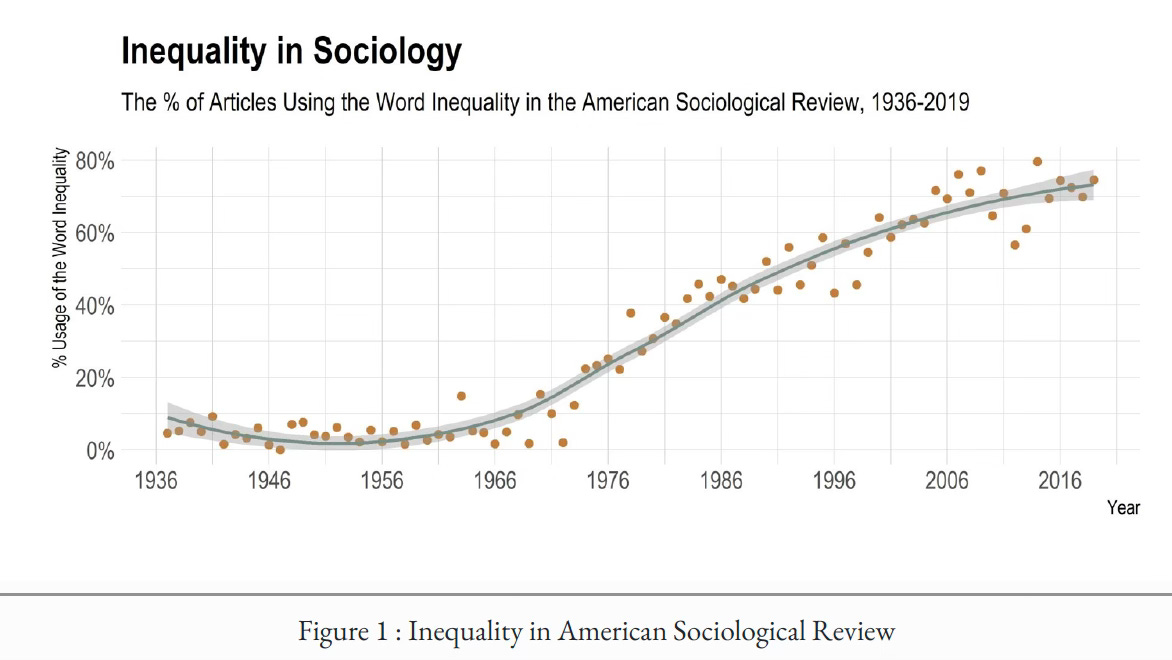
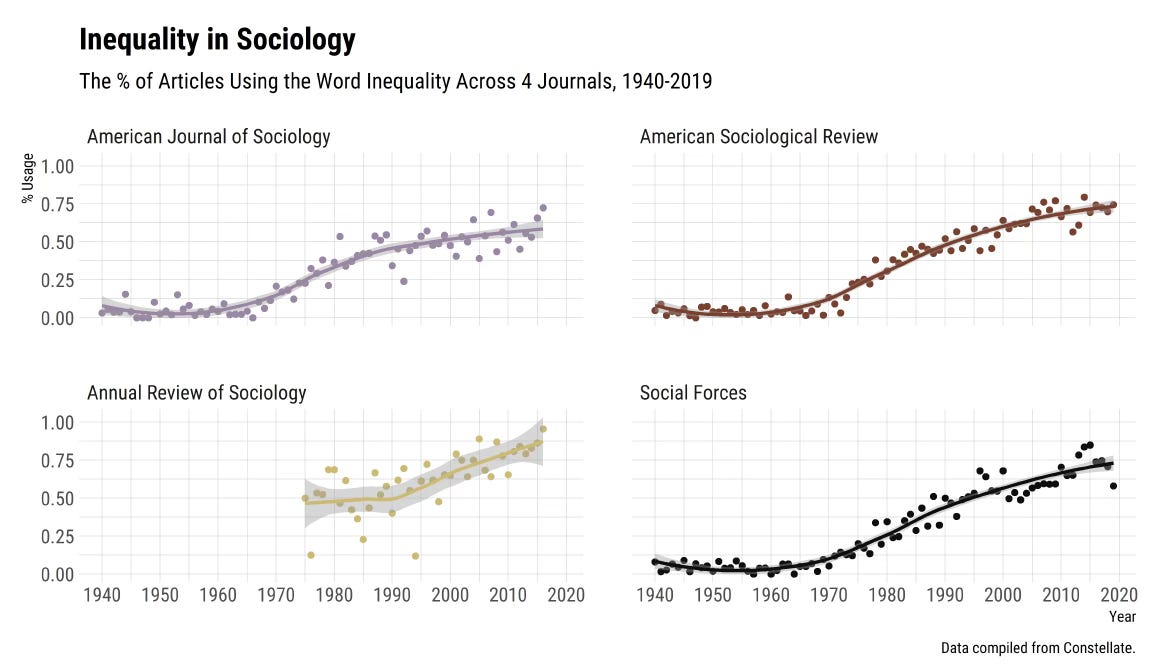
Lots to be said about the decrepitude of sociology as a discipline, starting with asking if it deserves to be its own discipline at all (more on this in a moment), but for the moment let’s just observe that it has become essentially an “inequality studies” field, which means it is simply an adjunct to the DSA ideology that is taking over the Democratic Party:
The Wall Street Journal’s “Review” section asks this weekend:
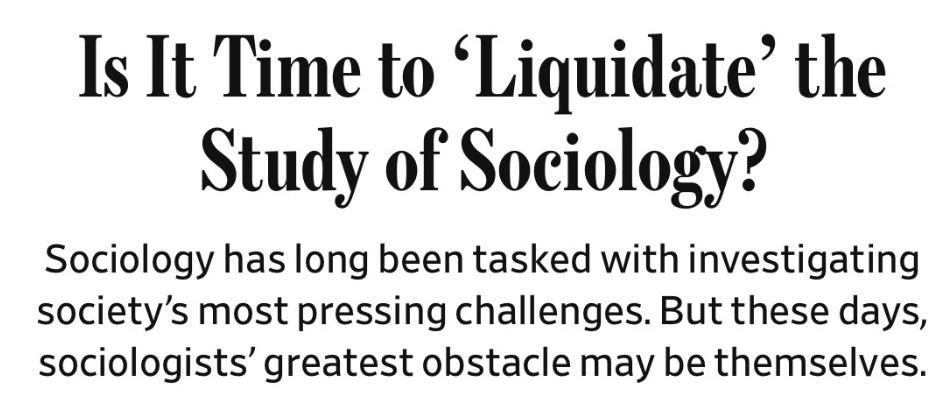
Excerpts:
“Sociology’s relentless focus on race, gender and class, its emphasis on the need for social change over the benefits of social stability and its obsession with inequality amount to an abdication of scholarly duty.”
And:
“Within sociology…any inequality among groups was de facto the result of discrimination, rendering moot other possible theories….suggesting research into alternative sociological explanations is viewed as racist, morally wrong and victim blaming.”
In any case, one major blow against the sociocracy of the campus left is the recent move by the Florida board of governors to ban intro sociology courses from any gen-ed curriculum at Florida’s public universities. One thing to understand is that the campus left—especially the Gender- and other -“Studies” departments—lobby very hard to have many of their courses apply for satisfying gen-ed or "core curriculum” requirements, as it is one of the only ways they can get students to enroll in their stupid courses, which many students do because they know the courses will be an easy A. (I can’t lay my hands on the data right now that at Yale, Gender Studies courses award A grades more than 90 percent of the time—sort of like they want to keep up with Harvard’s general grading.)
Understand that if sociology is removed as a core curriculum course option, the Gender Studies departments don’t have long for this world.
We might well wonder why our newly invigorated college trustees don’t go further and demand wholesale reform of these politicized departments. Believe it or not, Denmark—”socialist” Denmark (it really isn’t of course, but don’t tell AOC or Bernie)—back in the 1980s shuttered the University of Copenhagen’s sociology department because of its radical drift, dismissed the faculty, and reconstituted it several years later with more balance. Hey—if its good enough for Denmark, why isn’t it good enough for Columbia?
We might well ask the prior question of whether sociology should a scholarly discipline at all. As noted, it is deeply politicized, while professing to be an empirical method for examining aspects of social life apart from politics, laws, or even consideration of the basic debate about the nature of justice. Aristotle, the founder of political science and still the best political scientist ever, would find the modern field absurd, because he would rightly conceive it as a branch of political science, and necessarily integrated in to a complete understanding of the politea, or “regime.”
As a historical matter sociology broke away from political science alongside the baleful Germanification of American universities and the rise of the so-called social sciences in the late 19th century. It’s too long a story to recount sensibly in a Substack post—even the long ones I sometimes indulge. I’d recommend to interested readers Christian Smith’s 2014 book The Sacred Project of American Sociology, which surveys both its initial and residual promise along with its incoherence and ideological drift.
I’ll also just add that some of the best sociologists of the last two generations were conservatives or conservative-adjacent, or often times alternately identified as political scientists, and often were jointly appointed to political science departments, such as James Q. Wilson, Robert Nisbet, Peter Berger (his Invitation to Sociology is excellent), and Nathan Glazer. QED. In a rightly ordered university, maybe sociology would be folded back into political science. But they have their own huge defects.
I’ll have a follow up item soon on the rest of the oh-the-humanities!
I do like the concept of refusing grants and loans to students whose chosen field will not pay them more than someone with no degree or a lesser degree would receive. These people who shackle themselves with incredible debts that can never be repaid with the salaries common in their chosen field need to be protected from thier own perfidy.
The implosion can't accelerate fast enough for me.
As with so many of our failing institutions, the problems lie not in the institutions themselves but in the ideology of the people who have taken charge of those places.
Progressivism treats every problem as though it occurs in a void.
It is in our schools, from prek to phd that the culture of death is actively nurtured.
After the school shooting in my neighborhood, a lot of people lobbied for stronger gun laws.
No one lobbied for helping the mentally disturbed, no one acknowledged gender confusion as being a mental health issue and no one questioned why our society is currently producing so many homicidal maniacs.
Of what possible use is academia in a society in which reality is not valued?