
Notes from Upstream: What Makes a Good Song?
Number 5: Cowboy Songs

Still thinking about the ongoing horrors of the past few weeks, and conscious of my approaching Day Of Atonement, I’ll steal a moment from all that to share the pleasure I derive from something I love.
It is essential that we continue to remind ourselves of the beauty in our world. Some of that beauty lives in memories of music.
When I was six years old and we didn’t yet have a TV, I used to watch at my next-door neighbor Henry’s house. Henry was also six and was my best friend. His family was one of the few families around with a TV. Its screen was a dim and flickering 17 inches in diagonal, but you could make out good stuff on it
They don’t make TVs like that any more, which is fine with me.
Most afternoons we watched western B movies on a local late afternoon show which my leaky memory suggests might have been called Western Star Theater, though I can’t guarantee it.
The show interspersed black-and-white Bob Steele and Tim Holt and Sunset Carson westerns with music acts like Les Paul and Mary Ford.
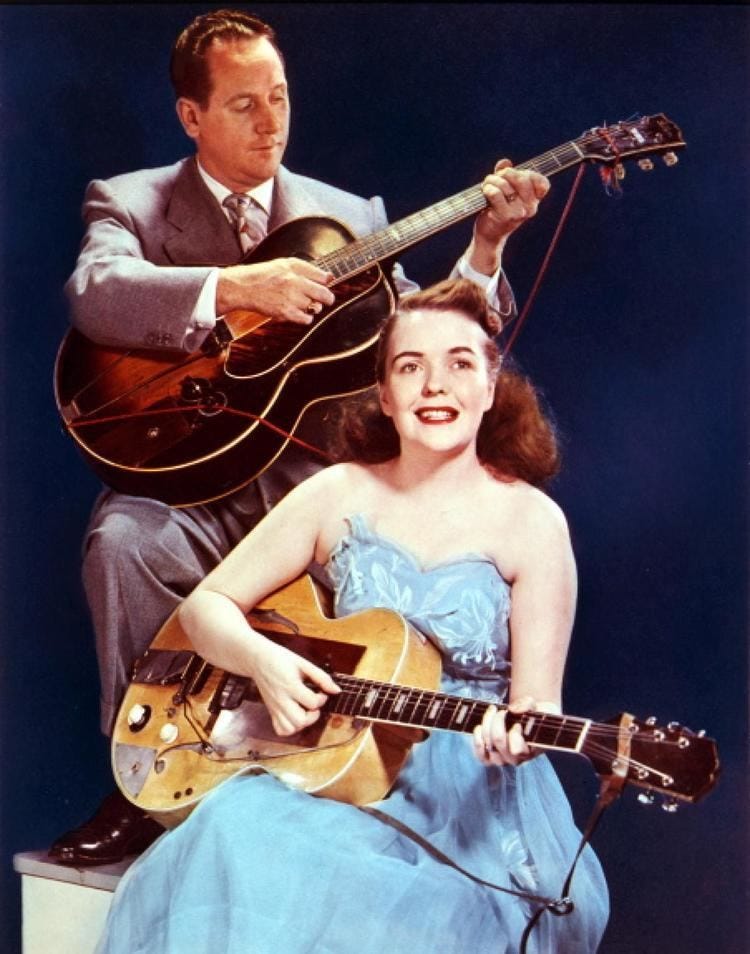
I remember Les Paul because he did something which stuck in my mind: unlike movie cowboys, he sometimes played a double-neck guitar.
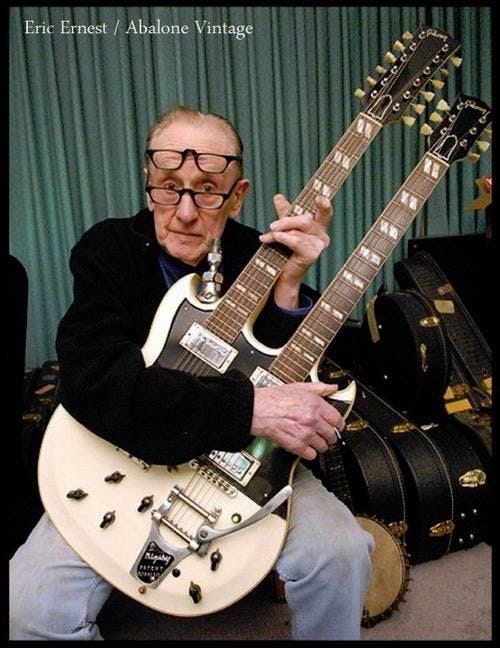
Les Paul, who lived to 94 and never stopped gigging
His music was too fast and jazzy for a six-year-old. I preferred the simple cowboy chords and tunes I heard in those cowboy movies, like Gene Autry singing Back In the Saddle Again.
For a few years, it seemed like every TV show was a western. One of my favorites was Maverick, which had a theme song I could and would sing at the drop of a Stetson.
For a single shot of decent bourbon, I’ll belt it out for you right now. I’ve heard me do it. To her discomfort, so has my wife Susan.
It takes nothing at all to get me to sing Have Gun Will Travel.
My first public piano performance came when I played a short portion of the theme song to the TV show Cheyenne by ear at a grade school assembly. I don’t remember what the assembly was about, or for that matter, where I got the nerve. I do recall that I didn’t sing it; I didn’t even know there were lyrics.
After music marketers invented the phrase “Country And Western” to package those two distinct music styles in one, I always preferred the “Western” to the “Country,” perhaps because of the great cowboy songs in the many western movies which saturated the culture I grew up in.
In the big band swing era, the western band Bob Wills and The Texas Playboys swung hard on San Antonio Rose:
Around 1980, I heard the late Sean Blackburn on local Twin Cities TV, singing western style on the thirties hit I Don’t Want To Set The World On Fire.
He and my wife Susan did some gigs together and he and I became friendly. One Saturday night in spring, 1986, I wandered into the legendary Palmer’s Bar, the Minneapolis landmark founded in 1906, and found him there. He stood playing rhythm guitar in one of those boring three-chord bar bands.
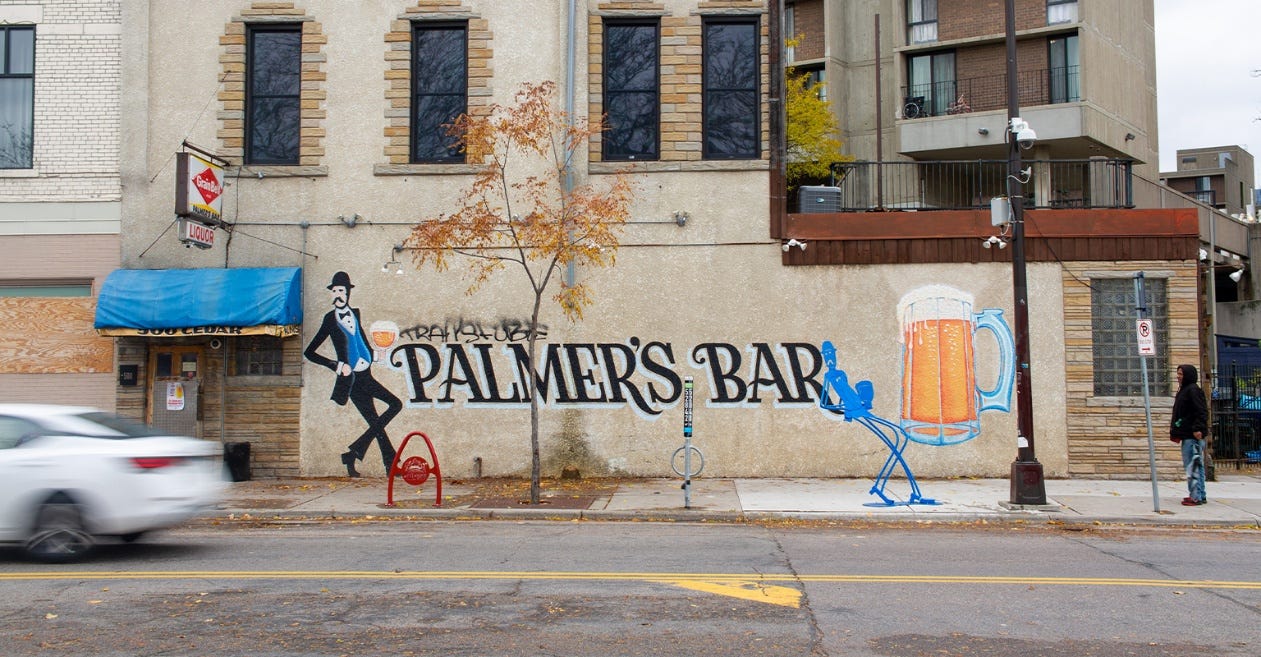
During a band break, I asked him why he was only strumming and not singing. He answered that the band leader wouldn’t let him sing. I figured the leader was jealous.
I told him that I had been attending law school for the past four years. Since I also worked a fulltime job, I spent every free minute studying. I looked out among the chattering drinkers and told him, “I’ve missed a lot of normal life. I don’t even know what conversations those people are having. It’s been four years.”
He said, “They’re having the same conversations they had four years ago.”
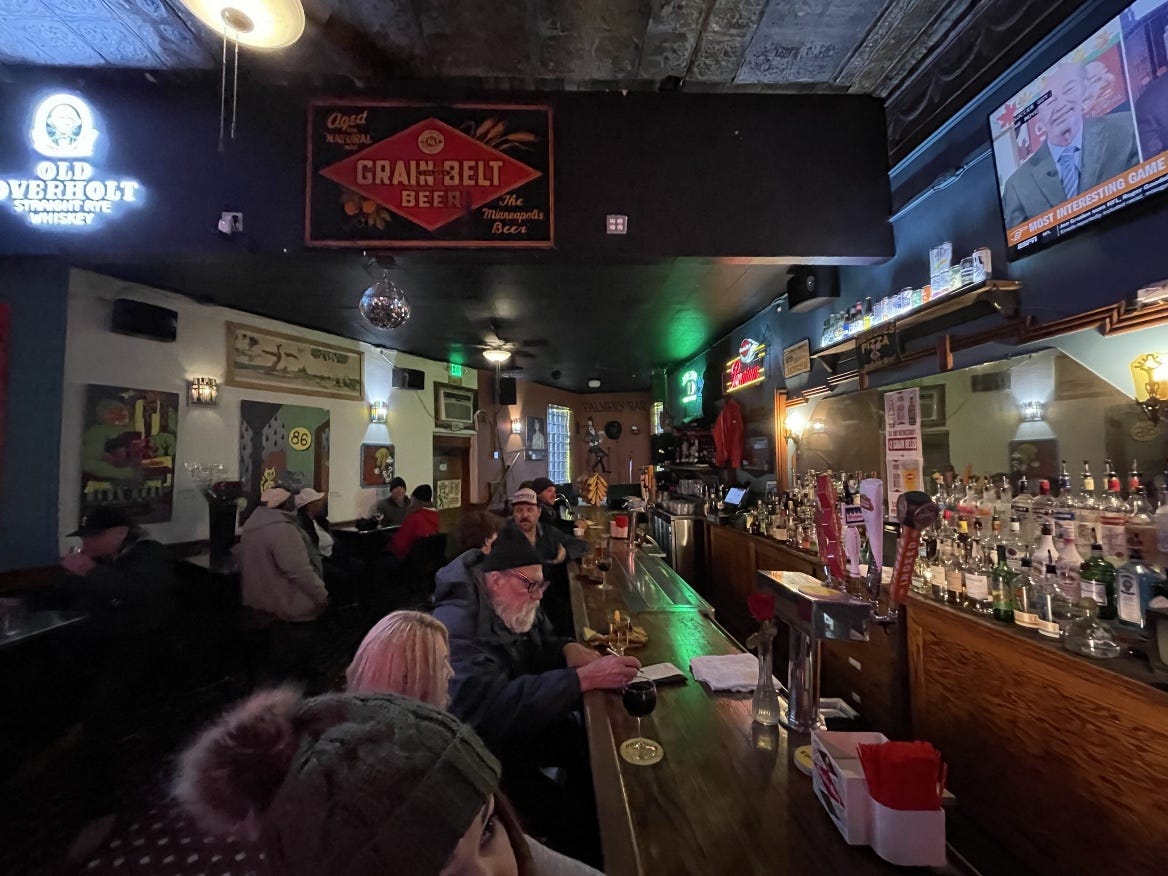
Palmer’s just went out of business this year. Perhaps this article, “Missing $379,000: The Real Reason Palmer’s Bar Is Closing,” explains why. The lede:
Hundreds of thousands of dollars unaccounted for: That’s the real reason behind the closing of Palmer’s Bar, an iconic live music venue and dive bar in Minneapolis. The first clues to this came in a late night Facebook update from the owners, Pat and Sarah Dwyer, who wrote: “When we bought Palmers, it was with a trusted partner that we had worked with for over 18 years. In 2022, we discovered that trust and partnership was broken, leaving Palmer’s in dire financial and operational straits.”
What was I writing about again? Oh, yes, cowboy songs. Here’s another western singer, from Glendale, Arizona, a few miles from where I live now. I never got to meet him.
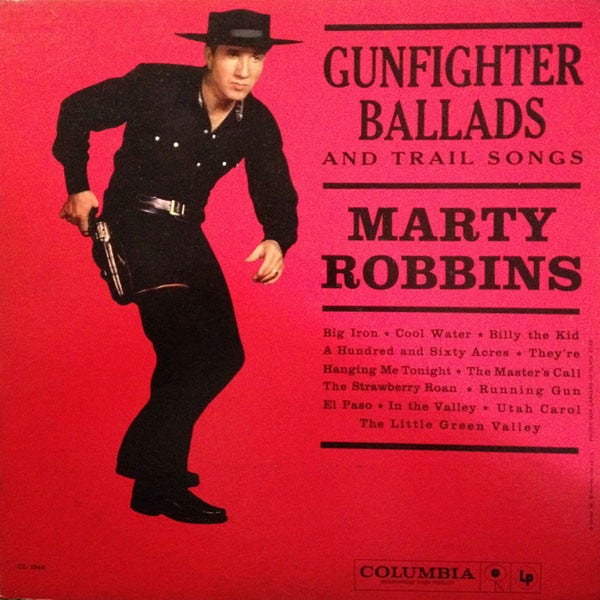
Marty Robbins wrote and sang the famous song El Paso:
But Dave Kapp wrote the song A Hundred And Sixty Acres:
The title phrase A Hundred And Sixty Acres resonates in American history. The 1862 Homestead Act granted title to 160 acres of free western land to anyone who settled it for five years. Millions took advantage of this bonanza. Their homesteads ultimately covered 270 million acres in 30 western states.
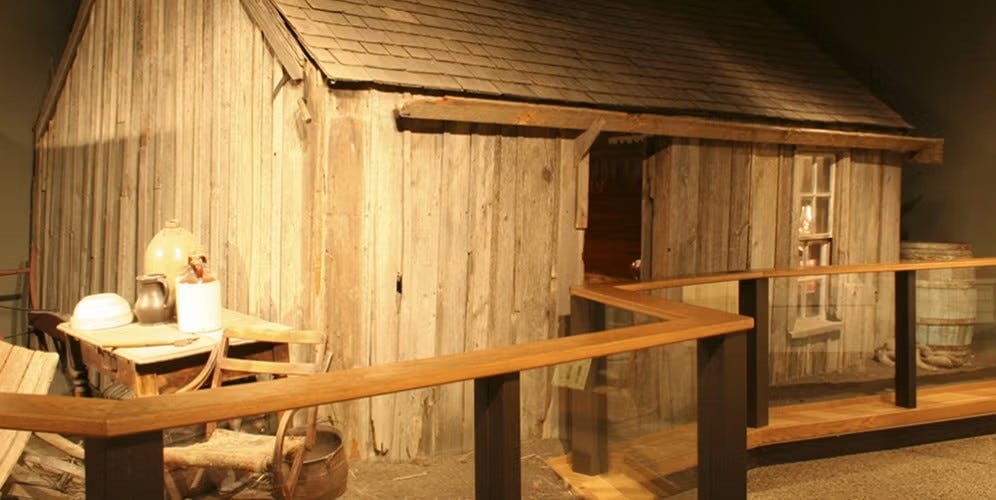
One homesteader was our son’s great-great grandfather John Schanck. To obtain title to the land, the homesteader had to build a home and keep it up. My wife Susan has visited her family’s original claim shack at the South Dakota Agricultural Heritage Museum, where they exhibit it to this day.
Marty Robbins also had a hit with Bob Nolan’s 1936 song Cool Water. Here is Bob Nolan singing his song:
Bob Nolan helped found the Sons of The Pioneers. They sang in something like 87 feature films between 1935 and 1984. Bob Nolan sang with them on another classic he wrote, Tumbling Tumbleweeds.
Director John Ford must have loved the Sons of the Pioneers as much as the rest of us. He cast them in a John Wayne Western, costumed them in Cavalry blue and filmed them singing the old Tin Pan Alley pseudo-Irish song, I’ll Take You Home Again Kathleen.
The spectacular lead baritone belonged to Ken Curtis, who later employed a very different voice for his eleven years playing Festus on the TV Western Gunsmoke.
Bob Fletcher was a Montana poet. His poem Open Range ends with a familiar line:
“Just give me country big and wide
With benchland, hills and breaks,
With coulees, cactus, buttes and range,
With creeks, and mountain lakes,
Until I cross the Great Divide,
Then, God, forgive each sin
And turn me loose on my cayuse
But please don’t fence me in.”
In 1934, a Hollywood studio tasked songwriter Cole Porter to write a song for a Western movie. This was a stretch for Porter, a fabulously wealthy and gay ultra-sophisticate who felt more at home in an Italian villa than on Montana’s open range.
Like any smart writer, Porter looked for help. He paid Fletcher $250 for the rights to Fletcher’s poem and used it as partial source for an early version of his lyrics. He set his own tune to them. The movie never got made.
As with people, it is the way of words and tunes to wander here and there until they land someplace where somebody notices them and wants them.
In 1944, Warner Brothers filmed a movie called Hollywood Canteen. The movie featured Hollywood personalities serving free food and entertainment to express appreciation to servicemen about to ship overseas to the War. Bigtime celebrities who appeared in the movie included Bette Davis, John Garfield, Joan Crawford, Jack Benny, Barbara Stanwyck, Eddie Cantor, Peter Lorre, and many other stars from what some call “Hollywood’s Golden Age.”
Hollywood was different then.
Naturally, cowboy star Roy Rogers and his dancing palomino Trigger showed up, and Roy sang the Cole Porter song Don’t Fence Me In.
Now that the song was famous, the poet Fletcher hired lawyers. His lawyers worked with Porter’s lawyers and in the end Fletcher received credit as song cowriter.
Even though Cole Porter had no legal obligation to do so, he volunteered for Fletcher to receive all future song royalties.
That’s a nice reminder that kindness still happens in our country, which is full of decent people who can and will do a good thing if you only ask them to.
In light of all that’s been happening lately, that is worth remembering too.
Max Cossack is an author, attorney, composer, and software architect (he can code). He was written one western novel, White Money, entirely in prose and therefore bereft of songs. He lives in Arizona with his wife, whose name you should have guessed by now is “Susan.”
 | A guest post by
|
Not to turn the comments into a political discussion, but I am just coming off of a frustrating narrative with a female journalist over the plight of boys. Being 80 I remember a huge amount of this and reading this article it struck me that the demise of the TV western happened about the same time as white educated liberal females took over.
Thanks for the MANY memories, Max. My husband Wayne and I both loved so many of those songs, and Wayne , like many others, used to tape his favorite songs and play them endlessly. The ones you feature here are old favorites, of course. It's hard to find tape players anymore, more's the pity.