
Notes from Upstream: Root, Hog, or Die
Mass Formation vs. Individual Responsibility

One question won’t go away. The question takes many forms and generates many sub-questions. The sub-questions usually go something like this:
· Where does communism / fascism / Nazism / Antifa / antisemitism / fill-in-the-mania come from?
· Why do people form mobs?
· Why do people join totalitarian movements?
Suggestions for answers overflow our browsers and our bookshelves. For instance, Belgian Professor Mattias Desmet coined the phrase “Mass Formation” in his 2022 book The Psychology of Totalitarianism.
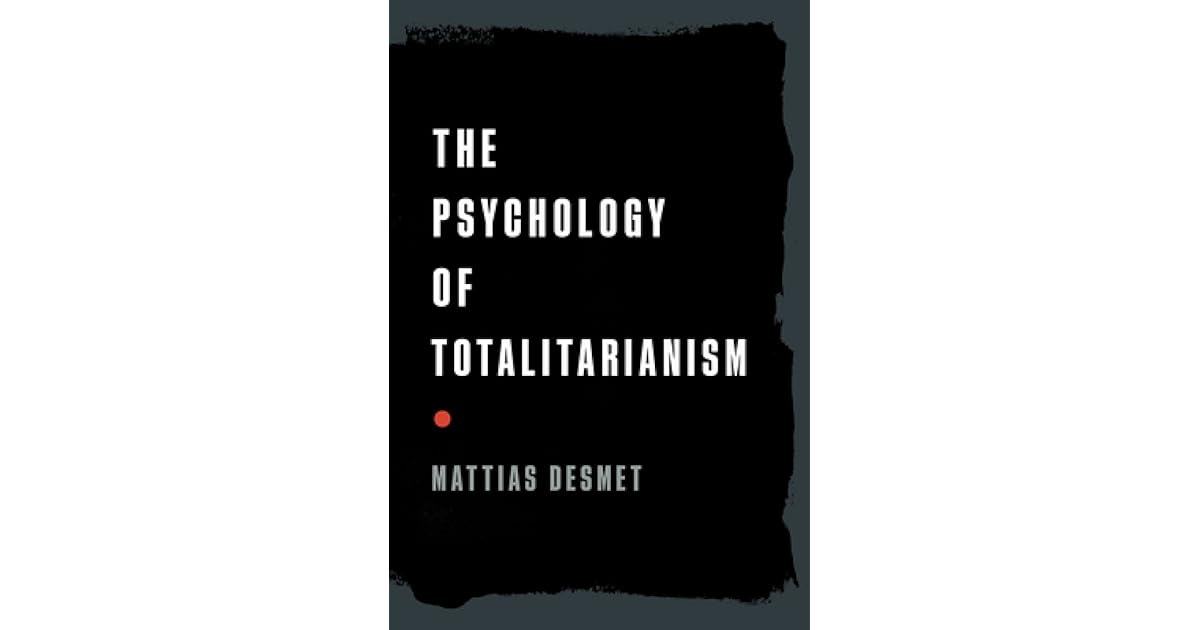
“In ancient times, people had to meet physically to form a mass. Now people can sit isolated in living rooms and form a mass because they are all infused through with the same narratives….Once people are disconnected and lonely they will typically start to struggle with lack of meaning and lack of purpose in life.”
Desmet is following up on the investigations of thinkers like Gustave Le Bon, who, in 1895, published The Crowd: A Study of the Popular Mind, as well as Hannah Arendt’s writings on totalitarianism, among many others.
Dr. Robert Malone chose Desmet’s phrase “Mass Formation” to describe the frenzied enforcement and mass compliance with COVID-19 masks and lockdowns as well as the mRNA vaccinations he helped invent.
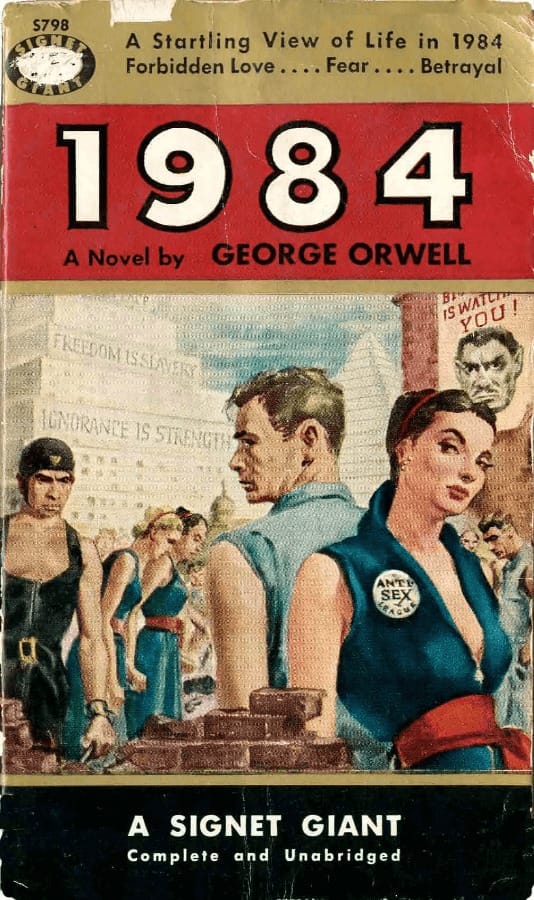
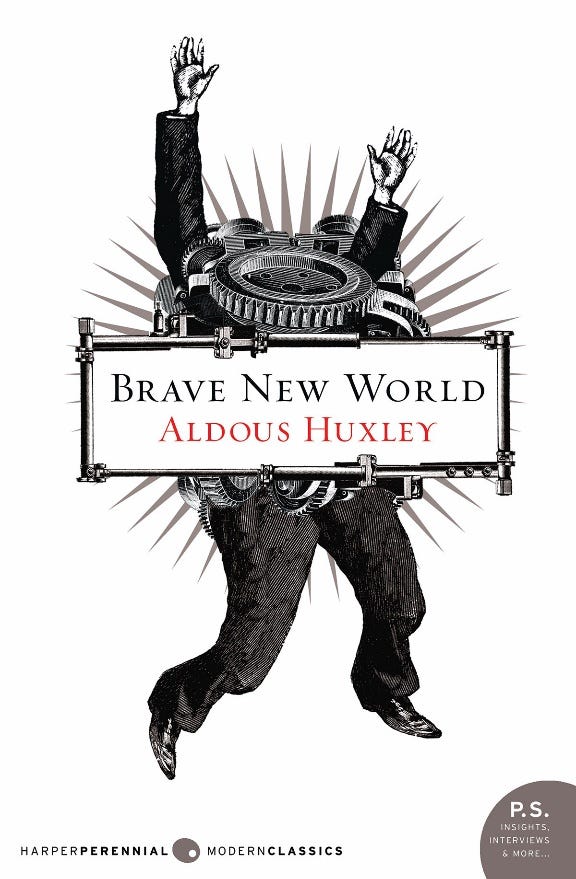
Great novelists have explored totalitarianism in famous dystopian novels, like George Orwell’s Nineteen Eighty Four and Aldous Huxley’s Brave New World.
In 1869, Dostoevsky started writing his novel Demons (Бесы).
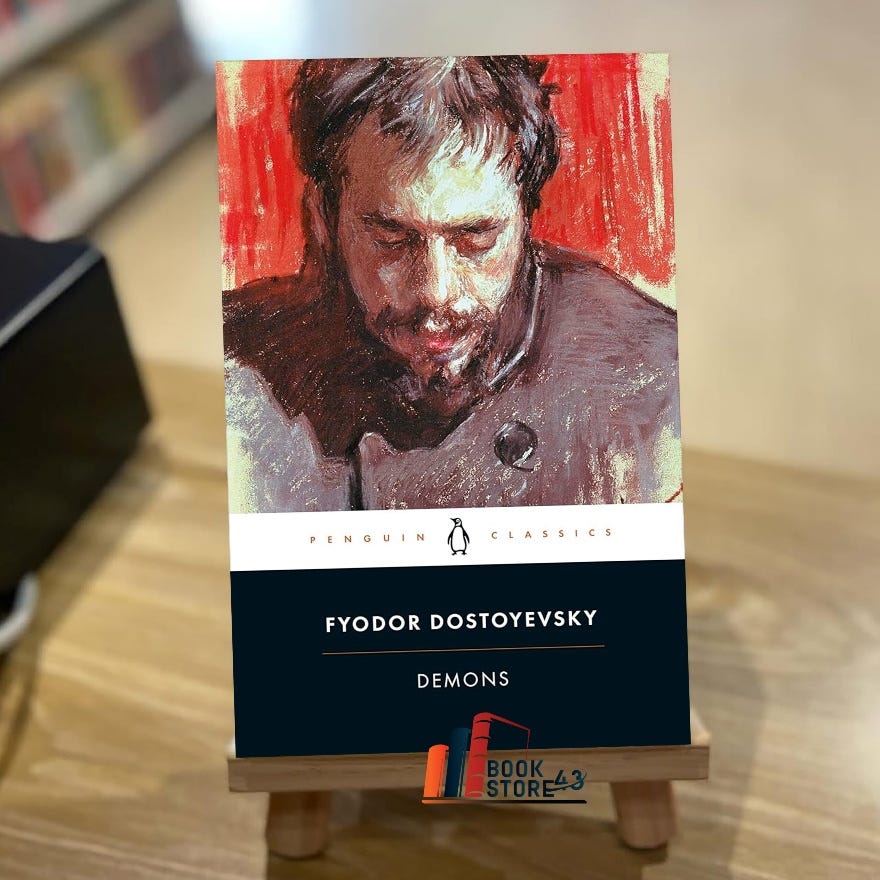
Before the real-life Lenin even slithered out of his mother’s womb in April, 1870, Dostoevsky sketched an eerily prescient Leninesque nutcase agitating at a local literary gathering.
“Pandemonium broke out as an unexpected third reader, a ‘professor’ from Petersburg, immediately took the stage in his place. He was a man of about forty, bald front and back, with a grayish little beard, who, while delivering his incomprehensible harangue, kept raising his fist over his head and bringing it down as if crushing some adversary to dust. He even managed to shout something to the end, though it was impossible to make anything out because of the noise. But they managed to drag him off the stage all the same. Later, however, during the ball, he again appeared for a moment in the hall, shouting and gesticulating, but was quickly dragged away again by six officials this time.”
—Dostoevsky, Demons
Most of the above writers treat totalitarian movements and behavior as if they are anomalies.
Given human history, this approach seems naïve in the extreme.
Dictatorship is not the anomaly. Freedom is the anomaly. The aberration is not Putin’s Russia or Communist China or IRGC Iran, but the American Republic and countries who follow our example. That is the deviation from the norm.
So where does this American deviation come from?
We can start with our founding proposition from the Declaration of Independence.
“All men are created equal, and are endowed by their Creator with certain unalienable rights.”
As Ron Swanson from the TV show Parks and Recreation put it on his visit to London, “History began on July 4, 1776. Everything before that was a mistake.”
John Locke and other philosophers may have formulated the ideas, but the culture which embraced them was the culture of the English-speaking American colonies, in particular its northeast coast, where former colonies like Vermont, Massachusetts and New Hampshire banned slavery the first chance they got loose from England.
New England in general already had a tradition of democratic local governance. In Democracy in America, Alexis de Tocqueville wrote:
“Town-meetings are to liberty what primary schools are to science; they bring it within the people’s reach, they teach men how to use and how to enjoy it. A nation may establish a free government, but without municipal institutions it cannot have the spirit of liberty.”
Consistent with their insistence on local governance, American colonists and pioneers were individualists. They did not wait around for government handouts. A popular proverb was “Root, hog, or die.”
That’s fun grammar for a folk saying. The word “hog” is a noun of direct address, that is, in the “vocative” case. The speaker is addressing the hog, which if you think about it, is an odd choice for a moralist.
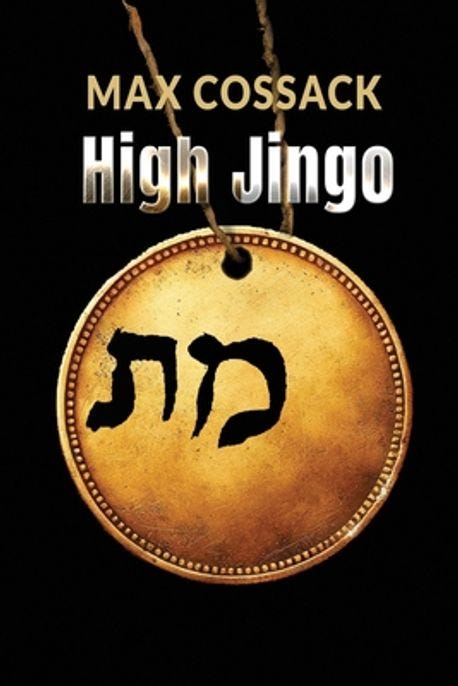
I’ll bend our imaginary Substack rules and quote myself, from the section titled “1851” from my novel High Jingo:
“Root, hog, or die,” was the American proverb. Every American man was expected to survive or fail on his own. The saying came from the colonial custom of setting pigs free in the woods and letting them live or die on their own.
Yancey followed that motto with his own pigs. He just let them wander wherever they wanted. Sometimes they survived and sometimes they didn’t. There were a lot of predators in these woods. Sometimes they were men short on victuals.”
Max Cossack, High Jingo
In 2012, the Obama campaign produced a slide show called “The Life Of Julia” which bragged that Chairman Big Brother President Obama wanted to coddle, cosset, and cuddle an imaginary woman every step from toddlerhood to retirement, eliminating from her life all obstacles, struggles or worries about anything ever.
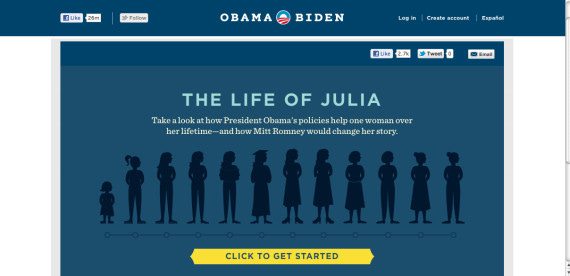
You can watch the entire slide show at this link.
A culture which celebrates dependence on government is creating a new principle, something like “Jab, Junkie, and Die.”

With the goal of destroying conservativism, the “Woke Right” joins Obama and his Leftists in their own version of mob-inflected grievance politics, usually blaming “the Jews,” including Israel.

But we cannot blame the mass formation phenomenon on contemporary Internet and social media. It’s too ancient for that.
Two thousand years ago, “bread and circuses” helped turn the rare Roman Republic into another despotic Empire.
Likewise, Mamdani’s antisemitic mobs are nothing new. Pogroms go back at least to the first century in Alexandria in Egypt.
What’s our alternative?
In 1948, we had just finished World War 2 and its life-and-death struggle against totalitarianism. Harding College pointed the way forward with this sappy but snappy little cartoon, Make Mine Freedom:
“I hereby turn over to Ism, Incorporated, everything I have, including my freedom and the freedom of my children and my children’s children, in return for which said Ism promises to take care of me forever.”
De Tocqueville never actually wrote or said, “America is great because she is good, and if America ever ceases to be good, America will cease to be great.” But he might as well have.
Stick to what got us here. We can and should stay true to what Lincoln called his “ancient faith” of the Declaration of Independence, which in turn found its sources in moral and spiritual traditions which go back at least four thousand years, starting with the original Abraham.
That’s where we find the individual meaning and purpose in life Desmet spoke of, not as part of some brainless mob led by idiots, nutjobs and grifters.
“We have no government armed with power capable of contending with human passions unbridled by morality and religion. Avarice, ambition, revenge, or gallantry, would break the strongest cords of our Constitution as a whale goes through a net. Our Constitution was made only for a moral and religious people. It is wholly inadequate to the government of any other.”
It follows that protecting our Republic requires us first of all to be a moral and religious people.
Easier said than done, but the principle reduces a collective issue to an individual one. It puts the responsibility on each one of us even before he or she starts to declaim on political and social issues.
It’s also a lot harder than it looks. Like the original “All men are created equal,” it’s aspirational, rather than a claim about current objective reality.
In line with that thinking, and in a different context, Adams also wrote one of my favorite sentences of all time:
“We cannot insure success, but we can deserve it.”
Max Cossack lives with his wife Susan in a dusty little village in Arizona with two cats who pay no attention to any of what he just wrote. They’re totally dependent on the two humans who care for them. But they like it like that, unlike developed and realized human beings. On the other hand, no one has ever seen a mob of cats.
One of his eleven novels is High Jingo, available in eBook or paperback on Amazon.
 | A guest post by
|
I’ve really taken to these Thursday morning Notes from Upstream by the celebrated author Max Cossack. And today is special because, as Jerry Lee Lewis used to sing, “There’s a whole lot of quotin’ goin’ on.”
And I love the patriotism displayed here. In this important year, the semiquincentennial of The Declaration of Independence, (doing some Lincoln math here…score this, move the decimal over there, tally most of it all up…) I quote this memorable phrase: “Twelve score plus a half-score ago, our Forefathers began history.” Ron Swanson.
Barack Obama and his ilk have been trying to bend the Arc of History towards National Socialism but me and Ron Swanson are having none of it. The American Experiment continues, the socialist experiments have all proven to be God-awful failures. Obama can no more bend the Arc of History than he can lower the sea levels with green gobbledygook.
I was a little disappointed that with all the quotin’ goin’ on here, Desmet, Orwell, Huxley, Dostoevsky, Swanson, Adams…nothing at all from Yogi Berra who knew a thing or two about mobs and groups of people. “Nobody eats at that restaurant anymore…it’s too crowded.” And nobody goes into the public square anymore, it’s filled with mostly-peaceful mobs. We must change that.
By the by Max: An “Early Mass Market Paperback With Salacious Cover.” Have you considered a salacious cover? Yogi taught us: “Salacious covers sell.”
Way to be Max, another thought-provoking posting that needs to be read by all or at least most of all.
We can look to England for how easily a civilization, or at least a country, is lost, fecklessly forfeited by ceding it without a fight.
Some years ago, I went to visit relatives in my birth country of England. In the trips from and back to Heathrow my drivers each time were Muslims. How did I know? Because they immediately told me so. The first excoriated me the entire almost hour-long journey for being a woman traveling alone - that is, without a male family member. The second proudly advised me that the Islamic flag would one day fly over the Houses of Parliament; that no people had a right to their own land if a stronger, more committed force sought to take it.
I strenuously argued with both. I also tipped them both - because who wants to be thought a racist. And that is how you lose your country.