
Notes from Upstream: Monsters
As usual, the Bard has the best grip on the matter

Every good story needs a “protagonist.” That’s the character whose drama the audience follows. Since conflict drives drama, the protagonist must struggle against an “antagonist,” usually a human being, also known as the “villain.”
In my post Animal Books, I wrote about nonhuman characters:
“Creators of relatable alien characters typically find some recognizable human attribute and exaggerate it… I’ve yet to read or see a genuinely alien SF alien.”
In response, friendly commenter William Krebs asked,
“But what about the Horta, in the ToS episode “Devil in the Dark”?
(“ToS” refers to Star Trek The Original Series).
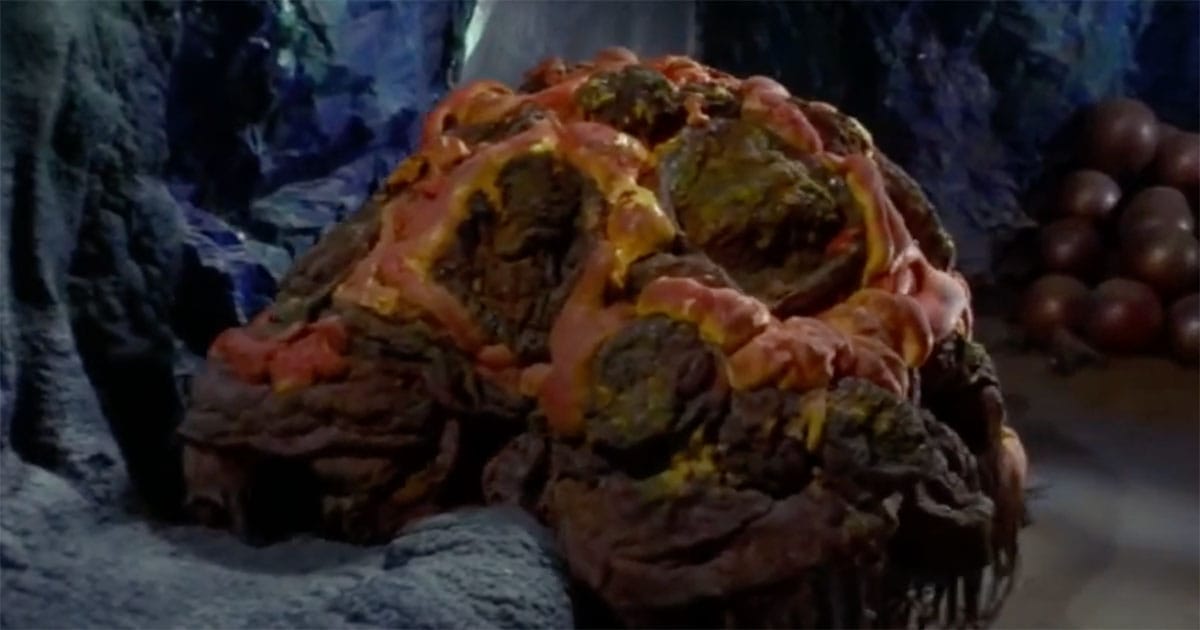
I appreciate William’s question. To help answer it, I watched The Devil In The Dark on the free streaming network Pluto. For those who have not seen the episode, here is an accurate Grok plot summary:
“The Enterprise investigates killings on mining colony Janus VI by a silicon-based creature, the Horta, which tunnels through rock and secretes acid. Spock’s mind-meld reveals it’s a mother protecting its eggs from unwitting miners, leading to peaceful cooperation.”
As the episode begins, Captain Kirk and his Enterprise team are the protagonists. The Horta is the antagonist. The Horta seems another standard monster in a standard defeat-the-monster tale, like the giant in Jack And The Beanstalk, Gruber in Die Hard, and monsters in thousands of other stories.
But Star Trek pulls a switcheroo. Spock reveals that the Horta possesses the recognizable human attribute of mother love. So the character who seemed a monster is not really a monster after all.
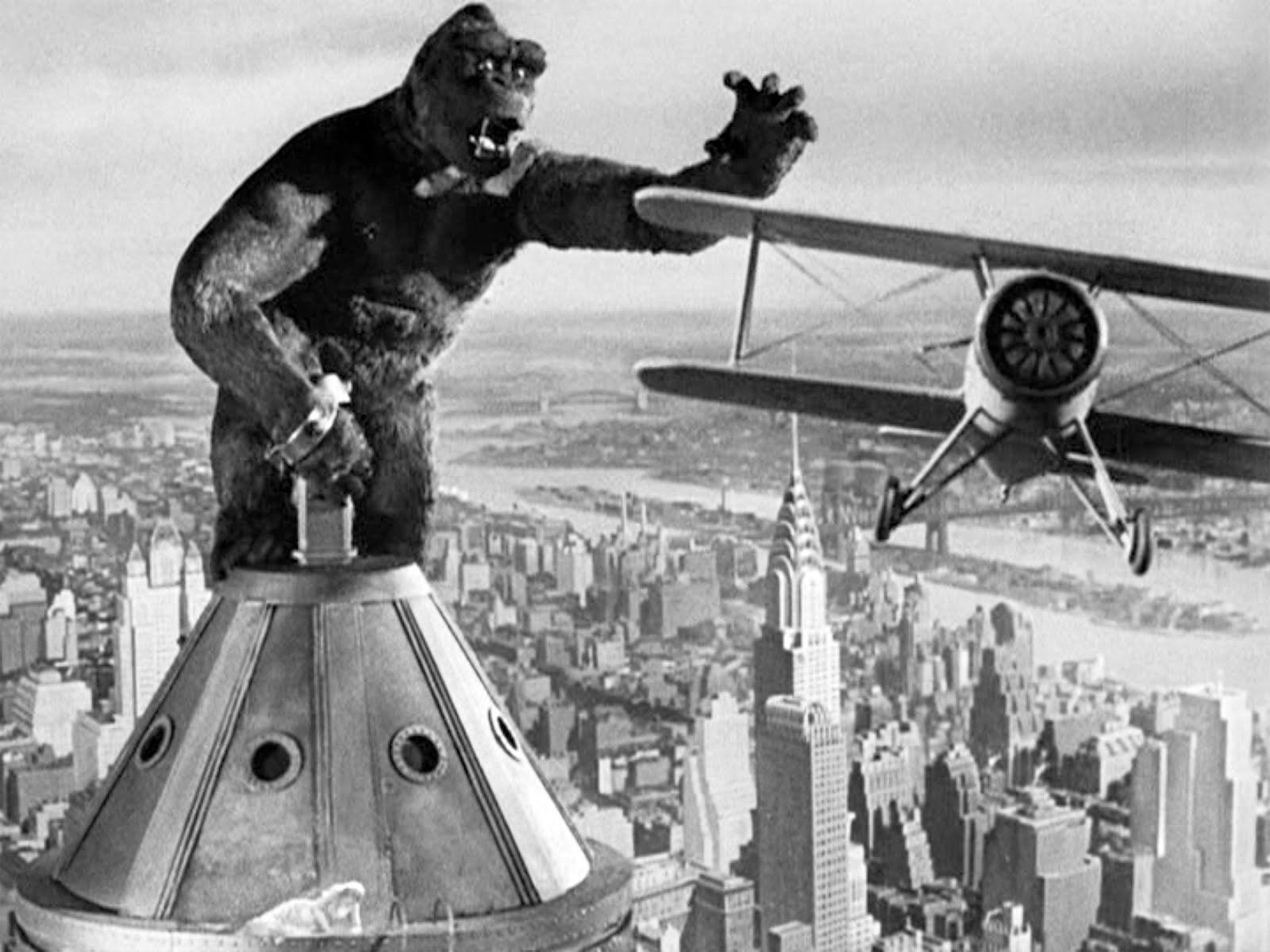
The monster who turns out not to be a monster shows up in a lot of stories. Human abuse drives King Kong to his tragic fate swatting away World War I biplanes from his perch on the Empire State Building. In Beauty and The Beast, the beast turns out to be a prince cursed into beastliness. Shrek may be an ogre but he is a good guy.
And of course, it is society’s rejection which turns young Frankenstein’s creation into a monster, as the audience sees in this disturbing yet compelling scene:
One of the few plays I have written featured a greedy, murderous villain. My wife asked the actor how he motivated himself to portray this monster with so much understanding. He answered, “I picture him having a sick child back in Indiana in desperate need of expensive medical care.”
Thus proving the adage, “Every villain is the hero of his own story.”
Where do audience members get this notion that there are monsters?
From millions of years of human experience.
Our ancestors fought and fled monster predators who were trying to kill and eat not only them but their babies.
Even nowadays, it doesn’t end well when an open-hearted human tries to befriend predators like grizzly bears:
Or lions with cute names like “Leona”:
 Tiktok failed to load.
Enable 3rd party cookies or use another browser
History is full of human monsters too. The Twentieth Century alone experienced Hitler, Stalin, Mao, Pol Pot, Idi Amin and dozens of others, all of whom earned their credentials by leading large numbers of monstrous followers.
In opposition to the indisputable fact that monsters exist, our media and politicians take the therapeutic approach. In another post, Notes from Upstream: Insanity or Evil?, I pointed a finger of scorn at the tiresome chorus of journalists who employ the mental illness excuse to explain away evil.
Americans were not always this squeamish. In older movies like The Wizard of Oz and Lord of The Rings, moviemakers were keen to show monsters. They understood that a villainous antagonist is a natural component of a compelling story.
Nowadays we have Hollywood rewriting classic after classic with “origin story” movies intended to rewrite villains.
Wicked rewrites the original Wicked Witch of the West from The Wizard of Oz as rejected and misunderstood because her skin is green. She explains her persecution this way: “They need someone to be wicked.”
Who is this “they” of whom she speaks?
The unwatchable Amazon Rings of Power reimagines Tolkien’s evil Orcs as members of loving families:
It is worth a few moments to look at how my favorite storyteller Shakespeare wrote his villains. Shakespeare did not flinch; he held the mirror up to nature and showed evil “her own feature.”
Richard III is a duke who wants to commit every crime he knows of in his quest for the king’s crown. He says so right out loud in the play’s first moments.
“And therefore, since I cannot prove a lover
To entertain these fair well-spoken days,
I am determinèd to prove a villain.”
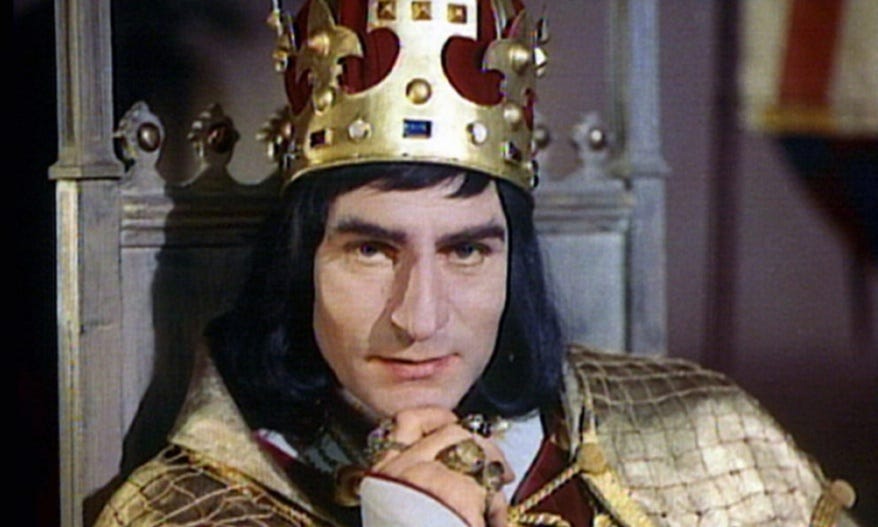
Richard’s final soliloquy is a moment of self-recognition in which he admits his evil:
“My conscience hath a thousand several tongues,
And every tongue brings in a several tale,
And every tale condemns me for a villain.
Perjury, perjury, in the highest degree;
Murder, stern murder, in the direst degree;
All several sins, all used in each degree,
Throng to the bar, crying all “Guilty, guilty!”
I shall despair. There is no creature loves me,
And if I die no soul will pity me.”
When the good guys kill Richard in battle the new king Richmond exults over his corpse.
“God and your arms be praised, victorious friends!
The day is ours; the bloody dog is dead.”
The “bloody dog”—a judgmental phrase if there ever was one.
Like Richard, in Hamlet, Claudius confesses his own villainy:
“O, my offence is rank it smells to heaven;
It hath the primal eldest curse upon’t,
A brother’s murder.”
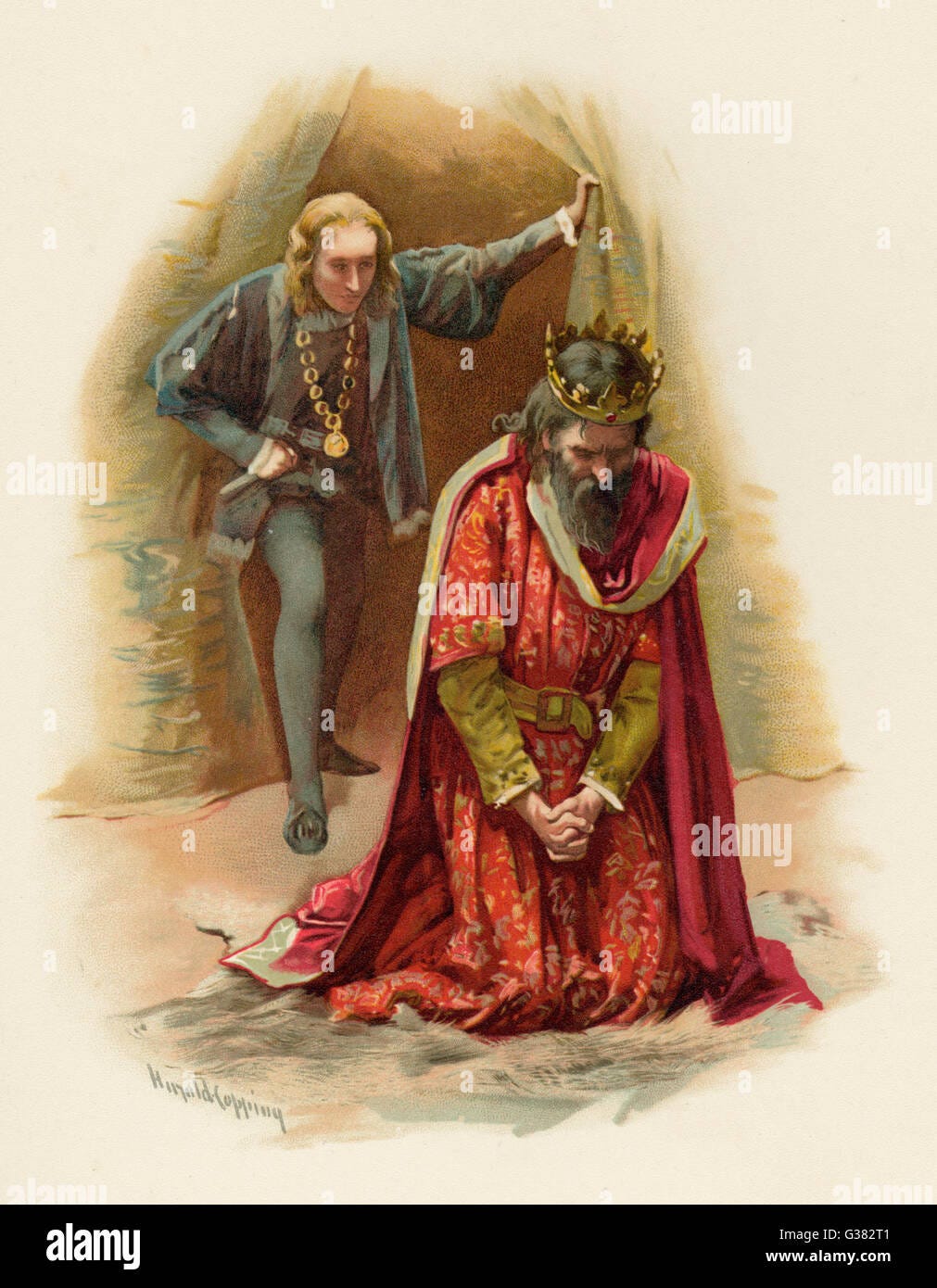
But since Claudius insists on hanging on to his gains, he cannot repent:
“But, O, what form of prayer
Can serve my turn?Forgive me my foul murder’?
That cannot be; since I am still possess’d
Of those effects for which I did the murder,
My crown, mine own ambition and my queen.”
The best-known Shakespeare monster is Iago from Othello. Iago tricks Othello into murdering Othello’s own loving wife. Except to the extent Iago manufactures excuses for his hatred of Othello, Iago seems without legitimate motive.
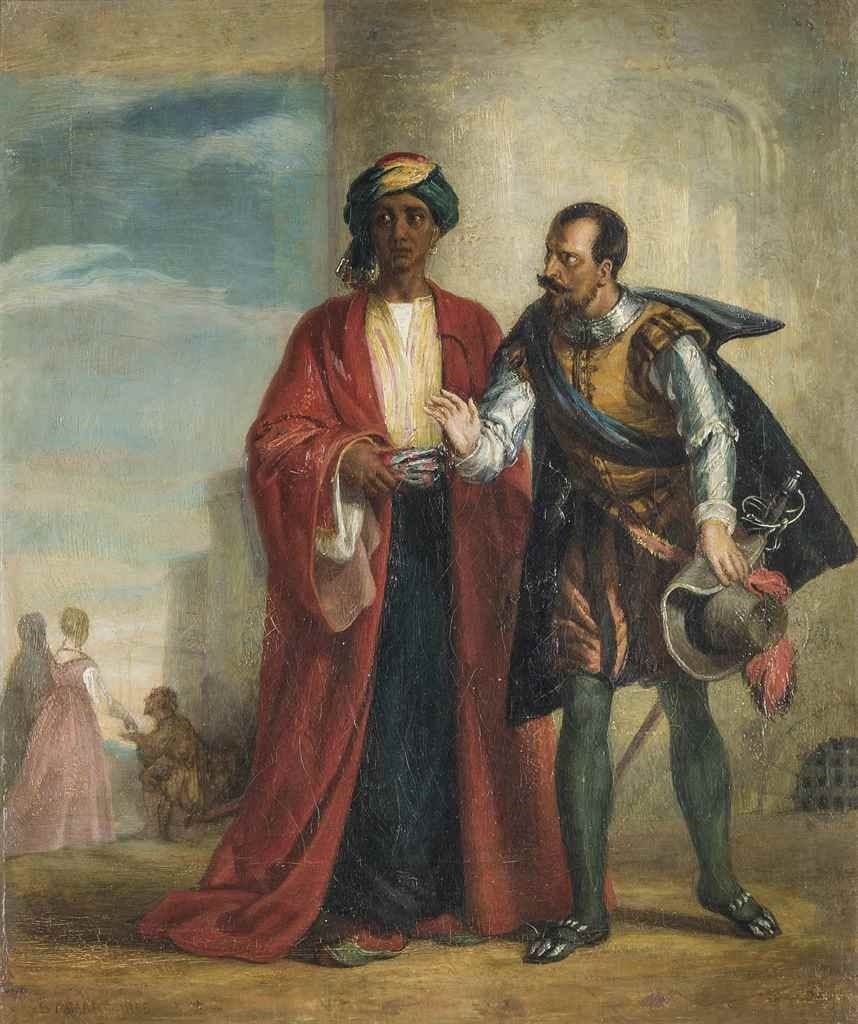
Not a digression: Iago is Shakespeare’s anticipation of the nihilistic malice which animates our current destructive monsters who manufacture grievances against America and the West to hide their own personal failures.
When others demand that Iago explain himself, he commits one last act of spite by refusing:
“Demand me nothing. What you know, you know.
From this time forth I never will speak word.”
There was a time when our institutions recognized the existence of monsters.
In Band of Brothers, Easy Company GIs expressed sarcasm at a news article claiming that their German enemies are “bad”:
Then they encountered Dachau.
For years the U.S. has been welcoming monsters into our country, for example, thousands of jihadis, including but in no way limited to the Afghani variety.
Director of National Intelligence Tulsi Gabbard claims that 2,000 individuals from Afghanistan in the U.S. have direct ties to Islamist terrorism.
Of course, Gabbard’s tally omits thousands of jihadis from other misgoverned holes.
Like Iagos, those who persist in this national suicide refuse to explain themselves. Instead they bully anyone who objects with “racist” and “Islamophobic” and other slurs which their overuse has drained of meaning.
I call this series of posts Notes From Upstream as a nod to Andrew Breitbart, who said, “politics is downstream from culture.”
The refusal to acknowledge monsters pervades our culture. It comes not just from Hollywood and news media but from liberal religious bodies, our medical and legal professions, and almost every other institution.
This upstream cultural lie flows downstream into political consequences. These consequences include murder not only of individual human beings, but the potential murder of our republic and the institutions which should protect us but refuse to do their job.
If that isn’t monstrous, what is?
Max Cossack is an author, attorney, composer, and software architect (he can code). His most recent novel is High Jingo. He lives with his wife in a dusty little village in Arizona with two cats too small and cute to qualify as monsters.
 | A guest post by
|
The newest version of Frankenstein captures a quality in the creature that I think from my own reading of the book is closer to Shelley's intent. It is, again, the misunderstood "monster" who better treated would very likely have turned out to be an ideal citizen. Unfortunately, our "betters" seem to think that the same can be said for jihadis who are really misunderstood. Had westerners not invaded their countries and interfered with their cultures, they might never have become the gadflies that they represent. That, at least, seems to be the notion of so-called liberals who are, in fact, haters of the culture that has brought them personal wealth and comfort.
In fact, like classic monsters, for me that earliest and worst is The Thing in Howard Hawks' movie that I saw for the first time when I was 8 years old, were driven by the desire to conquer earth and feed on all of its inhabitants, sort of like Islamism whose goal is world conquest. They aren't interested in living in harmony unless that tune is about everyone submitting to Allah. The inability of liberal thinkers to grasp that simple concept allowed millions to pour over our borders during the four years of the Biden (Read Obama 3rd term) administration. The desire to fundamentally change the United States was a goal of Obama and whoever it was who pushed him to the forefront and got him elected, and Biden's appointees simply marched in lockstep with that goal, mindless trolls that they were, much like the podpeople in that other classic horror film. Assigning humanity to them is as pointless as doing so for for the Thing or the Blob.
"Perjury, perjury in the highest degree" Shakespeare's line from Richard III, should be the new campaign slogan for the entire Democrat Party, but particularly for Tampon Tim Walz's re-election campaign. Who here doubts that he will win anyway? AG