
Hayek's Central Thesis at 80
Why the "knowledge problem" is the key to many things

This month marks the 80th anniversary of the appearance of Friedrich Hayek’s seminal essay, “The Use of Knowledge in Society” in the American Economic Review. Hayek was better known then—and now—for his sensational book from just the year before, The Road to Serfdom. But it is in “The Use of Knowledge in Society” that he lays out in a few short pages what might be called the “epistemological critique” of socialist economics.
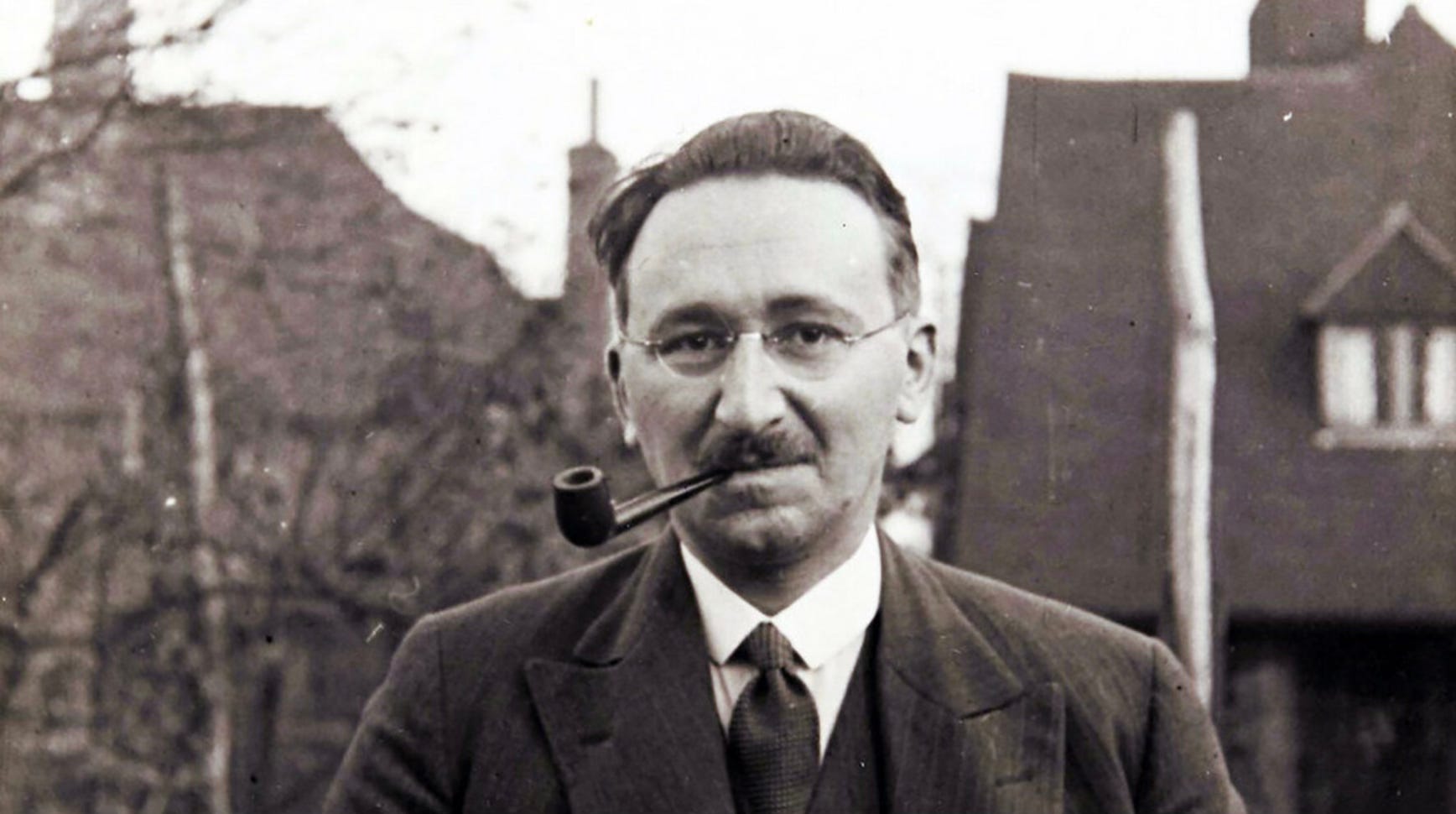
Before getting to a commentary on the article, it is worth noting that back in 2011, on the 100th anniversary of the American Economic Review, the editors asked a panel of six distinguished economists Kenneth J. Arrow, B. Douglas Bernheim, Martin S. Feldstein, Daniel L. McFadden, James M. Poterba, and Robert M. Solow—to come up with a list of the 20 most significant articles that had appeared in the AER over its first century. Hayek’s essay was one of the 20.
The irony here is best conveyed in a question I pose to students when I assign this essay for a class (which I try to do in nearly every class somehow, even if the class is on something Mesopotamian agronomy or something): “Why wouldn’t Hayek’s essay be published in the American Economic Review today?” Most students immediately jump to the conclusion that it is because Hayek was a free-marketeer and opponent of socialism, and the lefty editors would reject it for that reason. Perhaps, but that is not the main reason. The main reason is that the article contains no regression models, statistics, or mathematical theories, which is the dominant mode of how academic economics is conducted today. In other words, an article that is only text would not be considered “rigorous.” Such is the poverty of academic economics today.
Like most of Hayek’s challenging work, this rich but compact essay is compact because of Hayek’s ability to cram a lot of insight into long, compound sentences, requiring some effort by the reader. I’ve found him easy to understand once you get up to speed with his style, but that takes a while.
Let’s go through the opening of the essay:
What is the problem we wish to solve when we try to construct a rational economic order? On certain familiar assumptions the answer is simple enough. If we possess all the relevant information, if we can start out from a given system of preferences, and if we command complete knowledge of available means, the problem which remains is purely one of logic. That is, the answer to the question of what is the best use of the available means is implicit in our assumptions. The conditions which the solution of this optimum problem must satisfy have been fully worked out and can be stated best in mathematical form: put at their briefest, they are that the marginal rates of substitution between any two commodities or factors must be the same in all their different uses.
First of all, when Hayek says “rational economic order” he has in mind not just socialist central planning, but all of the intermediate forms of economic intervention by governments trying to direct or micromanage the economy. The idea of resolving the inherent problem of economic scarcity through calculations of “marginal rates of substitution” means making tradeoffs between proposed choices that will maximize total output of economic goods. But, as we shall see shortly, this can’t be done. Elsewhere in later years he called this the “constructivist fallacy,” or the “fatal conceit.” One of his great late aphorisms is that “The curious task of economics is to demonstrate to men how little they really know about what they imagine they can design.”
Let him unfold the problem in his second paragraph:
This, however, is emphatically not the economic problem which society faces. And the economic calculus which we have developed to solve this logical problem, though an important step toward the solution of the economic problem of society, does not yet provide an answer to it. The reason for this is that the ‘data’ from which the economic calculus starts are never for the whole society ‘given’ to a single mind which could work out the implications and can never be so given.
Socialism or central economic planning of any kind that commands resource allocation and use depends on accuracy huge amount of information, on which wise and “scientific” decisions are then made. At least that the theory. It is Hayek’s insight that such information doesn’t actually exist, and can never exist, no matter how massive our data collection and computing power might become.
He explains why in the next key paragraph of the whole essay:
“The peculiar character of the problem of a rational economic order is determined precisely by the fact that the knowledge of the circumstances of which we must make use never exists in concentrated or integrated form but solely as the dispersed bits of incomplete and frequently contradictory knowledge which all the separate individuals possess. The economic problem of society is thus not merely a problem of how to allocate ‘given’ resources—if ‘given’ is taken to mean given to a single mind which deliberately solves the problem set by these ‘data.’ It is rather a problem of how to secure the best use of resources known to any of the members of society, for ends whose relative importance only these individuals know. Or, to put it briefly, it is a problem of the utilization of knowledge which is not given to anyone in its totality.”
In other words, information is dispersed, and centralized, and, as the rest of the essay goes on to explain, is coordinated not by direct communication and decision, but by prices—the fundamental language of economics. Therefore the best economy will be the one that allows for the maximum latitude for individual choice based on local and particular knowledge, which, keep in mind, will be changing constantly—perhaps “instantaneously” is a better term. One clear implication is that even copious amounts of data flowing in to central planners will in many case be obsolete more than that it will often be inaccurate.
You can draw your own conclusions about the assumptions behind central banking. I’ll add that Hayek’s “knowledge problem” is not limited just for formal economic planning or socialism, but also applies equally to many aspects of regulation. Many regulations—think of land-use zoning as a great example—have enormous consequences for resource allocation and use.
My other interpretive contribution to Hayek’s insight is to note that while Hayek was mostly a modern in his philosophical training and outlook (Hayek and Ludwig Wittgenstein were second cousins, both raised in elite circles in Vienna, and thus soaked in positivism), his insight into the “knowledge problem” might be said to be the political economy version of Socratic ignorance—expressed in the famous statement of Socrates, “I know that I know nothing.” Plato didn’t mean it in exactly the same sense as Hayek, but if our government elites, especially those with authority to manage our economy, had the intellectual humility implied by either classical Socratic ignorance or Hayek’s epistemological limits, we’d make fewer policy mistakes.
I encourage interested readers to take in the whole essay at the link above. Much of Hayek’s subsequent work up to his death in the 1990s was working out his “knowledge problem” idea in greater detail. And, as I noted here in June on the occasion of Thomas Sowell’s birthday, Sowell had written an entire book, Knowledge and Decisions, about Hayek’s insight:
The book is in many ways a Thomistic commentary on F.A. Hayek’s short but seminal 1945 essay, “The Use of Knowledge in Society,” which I assign students as often as I can. Sowell admits as much on the first page of the book:
If one writing contributed more than any other to the framework within which this work developed, it would be an essay entitled “The Use of Knowledge in Society,” published in the American Economic Review of September 1945, and written by F.A. Hayek. . . In this plain and apparently simple essay was a deeply penetrating insight into the way societies functions and malfunction, and clues as to why they are so often and so profoundly misunderstood.
Let’s get out with one of Hayek’s simpler and shorter later restatements of the idea:
“The curious task of economics is to demonstrate to men how little they really know about what they imagine they can design. To the naive mind that can conceive of order only as the product of deliberate arrangement, it may seem absurd that in complex conditions order, and adaptation to the unknown, can be achieved more effectively by decentralizing decisions and that a division of authority will actually extend the possibility of overall order. Yet that decentralization actually leads to more information being taken into account.”
P.S. For another good reflection on Hayek’s essay, see economist Richard Ebeling’s analysis here.
Hayek is wonderful at explaining why socialism can never work. And of course we have a century or so of actual experience that demonstrates that it not only cannot work, it invariably results in suffering, death, and destruction. And yet socialism lives on, not just in third world slums but in Manhattan.
Richard Fernandez noted this:
“It's really amazing how Communism, even after killing hundreds of millions of people in the last 100 years and ruining every country it ever ruled -- without exception - can routinely take the moral high ground and unfailingly strike the pose of the movement of tomorrow. This teflon quality and brand management, not its material accomplishments which are nil, constitutes Communism's greatest historical achievement, of which we should all properly stand in awe.
Gentlemen, we are privileged to be witnessing tyranny's all-time high scoring game.”
And socialism is just history’s latest front for tyranny, that ”same old serpent” that says you work and I eat. In the nineteenth century when hereditary aristocracy was losing its luster, Marx came along with a new justification for rule by an elite with the added benefit that you too could be one of the tyrants regardless of your birth by simply taking a place in the statist machinery.
"The statesman who should attempt to direct private people how they ought to employ their capitals would assume an authority which could safely be trusted to no council or senate whatever, and which would nowhere be so dangerous as in the hands of a man who has folly and presumption enough to fancy himself fit to exercise it." -- Adam Smith